

Food is essential for survival. Yet, corporate power and the climate crisis are jeopardising our food system. Discover in 12 concise lessons how a handful of corporations dominate markets and how a fair food policy can be achieved.

1. A handful of corporate giants control what ends up on our plates. By dominating the markets for PESTICIDES, FERTILISERS, SEEDS, AND FARM MACHINERY, they entrench an industrial model of agriculture.
2. In many countries, A HANDFUL OF RETAIL CORPORATIONS dominate almost the entire sector. With this market power, they dictate prices and SQUEEZE PRODUCERS' INCOMES.
3. The global food system is responsible for around A THIRD OF WORLDWIDE GREENHOUSE GAS EMISSIONS. Some meat and dairy giants produce emissions on a scale comparable to that of major oil corporations.
4. Corporate power drives the production of ULTRA-PROCESSED FOODS because they yield the highest profits. The consequences are profound: in the European Union (EU), around A THIRD OF DEATHS FROM CARDIOVASCULAR DISEASE are linked to an unhealthy diet.
5. Global agribusiness players exploit WEAKER ENVIRONMENTAL AND HEALTH STANDARDS in the Global South in pursuit of higher profits. The EU continues to permit the export of vast quantities of pesticides prohibited within Europe itself.
6. To protect their business model, agribusiness corporations engage in EXTENSIVE LOBBYING. One example among many: More than 50 million euros were spent between 2020 and 2023 to block stricter EU rules on pesticides.
7. GIANT FOOD CORPORATIONS have channelled significant funding to multilateral food agencies. Voluntary funding now makes up 65 per cent of the UN Food and Agriculture Organization's budget and all World Food Programme funding.
8. FINANCIAL SPECULATION drives up food prices, enriching a small minority while pushing millions around the world into HUNGER AND POVERTY.
9. DIGITAL TECHNOLOGIES have the potential to ease the burden of agricultural work. At the same time, however, they are increasing DEPENDENCE ON POWERFUL GIANTS such as Amazon, Microsoft, and Bayer.
10. More and more farms are closing because they can no longer cover their costs. FAIR PRICES are ultimately A POLITICAL ISSUE: many strategies exist that enable farmers to earn a decent living.
11. Competition law is one of the most EFFECTIVE TOOLS FOR CURBING OLIGOPOLIES. Regulators must intervene more forcefully to limit market concentration and restore fair competition.
12. FOOD DEMOCRACY means ensuring that corporations no longer dictate how our food is being produced and distributed. HEALTH, CLIMATE, BIODIVERSITY, AND DECENT WORK can only be protected if the food system is shaped collectively by all those involved.
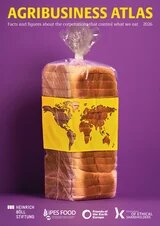
A handful of corporations dominate our food system, setting prices, profiting from crises, and driving relentless pressure on the environment, farmers, and consumers alike. The Agribusiness Atlas 2026 traces how this concentration of power took hold, and charts the political pathways toward a fairer food system built around the common good.
